Start an intricate coloring page with three pencils
An intricate page can ask too many questions at once: which color goes in the middle, whether every tiny shape needs a different color, and how to make the edge match. Give yourself a smaller assignment. Choose three pencils and color one group of shapes before planning the rest.
The example here is the mandala on PDF page 3 of our Intricate Patterns corrected selection. It has a small flower-like center, repeated pointed petals and a much denser outer border. Those layers give you places to pause. You can use the same method on another page you already own.
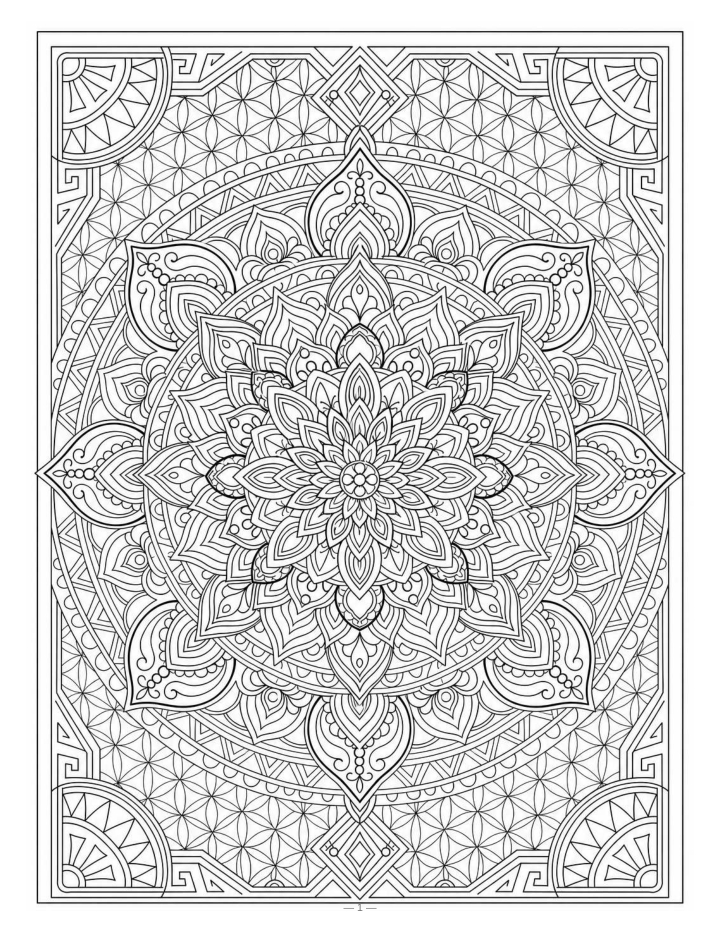
Digital page preview from the product PDF. This is not a photograph of a printed or colored page.
Choose by lightness before choosing by color name
Make three small pencil marks on scrap paper. Pick one that looks light, one in the middle and one dark. The marks should be easy to distinguish when you hold the paper at arm's length. Three different color names are less useful if they all make equally dark marks.
You could try pale yellow, a muted green and a dark blue from pencils you already have. That is a starting idea, not a required palette or a tested pencil combination. A light, medium and dark version of the same color can also give you a clear plan.
Before beginning the artwork, choose one simple rule:
| Pencil | Its first job |
|---|---|
| Light | Fill the small center and leave it visually quiet |
| Middle | Repeat across one group of petals |
| Dark | Add a few small accents after the first two colors are in place |
Give yourself a boundary
On the page preview, find the little circle at the center. Follow its outline outward to the first clearly separated petals. Your first assignment is only that center and one surrounding group. The large pointed forms and rectangular border can wait.
Start with a light touch. Fill the center, then use the middle pencil on one petal. Carry that choice around the matching petals you can identify. The rule is “repeat this choice,” not “make every shape mathematically identical.” If two neighboring shapes differ, leave one blank until you decide how it belongs.
Now add the dark pencil to a few small accents. Stop and look at the group as a whole before adding more. If dark areas dominate, use fewer of them in the next group; there is no need to introduce a fourth color to solve it.
Decide what to do next
Cover the uncolored outer portion with a spare sheet for a moment. Does the finished group have a clear light area, a repeated middle color and a few dark points? If so, you have a plan you can repeat. If the colors blend together, make a new three-mark test on scrap paper before continuing.
Leaving a petal or an entire ring white is also a choice. Finishing one coherent section gives you a useful stopping point without requiring a finished page.
For a page with more obvious separate sections, see how to choose a pattern by its structure. Before using a new printer or paper, follow the single-page test-print guide.
The page used in this guide
We make and sell the Intricate Patterns printable PDF on Etsy. The corrected selection contains 26 coloring designs in a 30-page PDF, including front and back matter. The mandala shown here is its first coloring design, on PDF page 3. The product uses AI-assisted artwork and is for personal use. No physical book or pencils are included.